
Monthly Archives: February 2026

‘Our performance is driven by embracing as many views and voices as possible’: James Thomson on how the Rathbone Global Opportunities Fund ranks so highly.


LEAD MANAGER OF THE TOP-PERFORMING FUND REFLECTS ON 26 YEARS IN FUND MANAGEMENT.

The Rathbone Global Opportunities Fund (GOF), with AUM of around $5.3 bn, has been ranked consistently highly in the global equity sector since James Thomson became lead manager in 2003.

Rathbones Asset Management has a boutique structure which fosters autonomy, accountability and entrepreneurial spirit but the Rathbones Group is a trusted long-term partner with more than 100 years  in wealth and investment management and $146 bn in client assets.

Thomson has been the lead manager of the Rathbone GOF since 2003 and was assistant manager of the fund at its inception in 2001 after joining Rathbone in 2000. He currently sits on the executive committee of Rathbones Asset Management.

He grew up on the island of Bermuda and graduated from Cornell University in New York. Across his career, Thomson has been recently quoted in the financial press and has won numerous fund management awards.

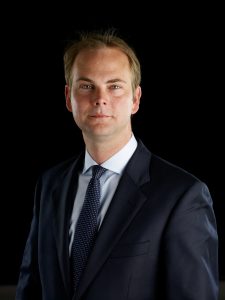
James Thomson, lead manager of the Rathbone Global Opportunities Fund

Below, he tells us more about his 26-year career in the asset management industry, his preference for US equities and how the hot and cold nature of the markets is his biggest bugbear.

You’ve been in the investment management industry since 2000. What’s changed for you in that time?

It’s hard to know where to begin: the 2008 Great Financial Crisis, zero interest rates, the domination of US equity investing, the rise of passive investing, Brexit and a series of wacky and unpredictable political events.

But perhaps I’ll go back to where I began – cutting my teeth in the dot-com crash, which many investors fear has echoes today.  That computing era had great promise but quickly deflated.  While it was a false start, it was also a fuzzy foreshadowing of big changes to come, in terms of market dominance but also investment strategy.

Value investing had been the only game in town for decades.  Buying mispriced securities that were trading below their intrinsic value – turnaround, recovery and special situations – that had a temporary interruption in their fundamentals but a valuation that created a margin of safety that investors could rely on.

The dot-com bubble challenged that investment strategy.  Scientific valuation analysis on the upside and the downside was thrown out the window.  Fear of missing out (FOMO) took over and the underperformance of many famous fund managers forced them either to abandon their principals or stubbornly stay the course and suffer terrible underperformance and withdrawals.  With hindsight, both of those strategies were wrong.

Fast forward to today, the early days of a new computing era.  The FOMO is there, leading to binary performance outcomes with big winners and losers at the stock and fund level, as is a concentrated market that is being fueled by the machines and tracker funds.

What do you like most about working in investment management?

Being inspired by some of the best and brightest management teams in the world – in such a wonderful variety of industries from AI to aggregates, payments to pest control, insurance to industrials.  We’ve owned many companies for more than 10 years so I’ve enjoyed seeing them adapt and continue to succeed in a variety of economic environments.

I like doing a good job for my clients and rewarding their choice to invest in me.

And what do you dislike?

The hot and cold nature of markets.  Stocks, sectors and themes can go from red hot to ice cold.  I think it’s creating a world of more inconsistent returns with sharper moves amplified by the trend following machines and the largest companies moving up as a group due to the weight of passive flows which some estimate represents up to 45 percent of the market.

As one analyst put it: A market dominated by price-agnostic purchasers cannot function as an efficient weighing mechanism: price discovery is derailed; natural, healthy economic biorhythms of rise and fall are impeded; and the market simply rises, led by its largest weights.

There’s a scarcity of certainty so I think investment returns will be lower and more inconsistent in the future, but that doesn’t mean you shouldn’t invest.

There will be different problems to face but I’m always impressed with the adaptability and resilience of our businesses.  Yes, economic and trend growth is slowing, but the pace of change only gets quicker.

Your fund has been ranked highly in the global equity sector since you became lead manager in 2003. To what do you attribute your success?

I suffer from a bit of imposter syndrome so this kind of question makes me feel uncomfortable. We’ve been fortunate to have had some great stock picking successes over the years with stocks we’ve owned for over a decade like Amazon, Visa and Rightmove in the UK.  We’ve owned Nvidia for the past seven years.

We’ve avoided areas that we don’t think have repeatable success prospects such as commodities and banks.  And we’ve tried to learn from mistakes like investing in autos and airlines. We’ve focused on quality growth, resilient, reliable and repeatable growth – often subscription-driven business models.

We’ve also enjoyed a lot of success focusing purely on developed markets – with most of the standout winners coming from the US.  We don’t think we have the skills or expertise to successfully invest in emerging markets so we leave to dedicated emerging market fund managers.  It’s a stock picking fund, so we look for innovative scalable businesses with ‘star quality’ before they become household names.

The GOF has an annualized return of 12.8 percent. Since 2003, it’s delivered 1268 percent vs 518 percent for  IA Global Sector Average and 851 percent for

What’s your investment style?

FTSE World.

All-weather growth stocks, focused on industry champions and under-the-radar and out-of-favor opportunities for growth.

I also focus on high-quality industry leaders situated in structural growth themes.  Plus we have a defensive basket of recession-resistant companies to protect us from market dislocations.  We want balance and diversity by country, sector and demand drivers.

The portfolio consists of 50 to 60 holdings, actively managed with conviction and avoiding turnaround special situations or recovery plays.

You also work with Sammy Dow and Michael Cumberlidge – how do you split sectors and geographies?

Sammy manages the fund alongside me and Michael is our product specialist.  Sammy has worked with me since 2014 but I’ve spoken to him at his previous role [at JP Morgan Cazenove] for 25 years.  We work well together because we have a politely combative and mildly confrontational relationship – but neither of us take that challenge personally.  I think healthy challenge is important to test investment cases and avoid staleness and complacency.  We try to look at everything together but there are often unavoidable clashes so we will split up to see as many companies and analysts as possible.

How do you work with Rathbone’s in-house analysts?

We work with our in-house analysts but they spend most of their time helping the wealth management part of our business.  We spend most of our research time with companies, sell-side analysts and independent research boutiques.  The greatest driver of our performance over the past 20 years has been to embrace as many views and voices as possible – to fully understand the investment case from bulls and bears rather than sitting in an echo chamber.  It’s also vital in a world that is changing so rapidly to canvas different views as we all make the mistake of underclubbing or over emphasizing at various points.

Do you have a market cap cut-off?

This is a mid- and large-cap fund, with the weighting drifting to even more large cap in recent years, as that’s where the performance has been coming from.  Some 94.14 percent of the fund is invested in large-cap companies (those with a £10 bn ($13.7 bn) market cap or higher).

And your average holding period?

Many companies in the fund have been there for more than five years; some more than 15 years.

What’s the typical size of your positions?

Typically we start a new position at 1.5 percent and trim for risk management purposes any holding exceeding 4 percent. In monetary terms, our largest holdings are about $200 mn.

Any sectors you avoid? What about ESG considerations?

We avoid pure commodity stocks as we don’t like sectors where the main driver of success is outside of their control, namely commodity prices.  We also tend to avoid low- to no-growth sectors such as utilities where there is a heavy regulatory hand.

This is not an ESG fund but we do consider ESG factors if it can be material to the investment case.  We vote on every AGM resolution and will often engage with management if we vote against board recommendations.

What screens do you use?

We don’t use quantitative screening as this is primarily a qualitatively ideas-driven investment process that bakes in valuation considerations.

What’s your active share figure?

Over 80 percent.

What about capital allocation?  Do you prefer dividends or buybacks?

I prefer buybacks as this is a capital growth-driven mandate.

Your holdings are heavily weighted towards the US – why?

We are 74.2 percent invested in the US. The US stock market continues to set the tone for equities worldwide.  Can US exceptionalism continue despite unsettling politics?  I think it will, which is why I have more than two thirds of the fund invested there. It’s the home of innovation and adaptability, as well as repeatable and mission-critical growth.  The US has six trillion-dollar companies – Europe has none.

Why is that? The US outperforms on tax, business freedom, lower government spending, greater

employment flexibility and a hunger to innovate.  There’s higher R&D spend and double the venture capital spend as a percentage of GDP.

Yes it’s an expensive market, but expensive doesn’t always mean overvalued.  Quality, resilience and a broad spread of future proof companies means this market will grow through volatile economic cycles.

Can you tell us about some of your larger holdings?

These include Costco, TJX Companies, Boston Scientific, Walmart (WMT), Alphabet (GOOG). They are long-standing, industry-leading investments in the fund.  They all share some of the key qualities that we look for in a successful investment:

  • Pure play businesses with scalable and repeatable growth prospects that can drive excellent
  • pricing which is then reinvested to grow market share, creating a repeating feedback loop
  • Unique consumer offerings that are difficult to replicate
  • Management teams that are adaptable, entrepreneurial and prudent with expectations
  • Many have pricing power or are the price leaders and their growth prospects are durable across a variety of economic scenarios.

Can you give us an example of an investee company which provides ‘downside protection’?

Rollins, the pest control business.  Unlike in many European markets, pest control is considered an essential service, the fourth emergency service in the US.  The bugs don’t really care about the economic cycle but the repeat subscription-like nature of this essential service is a key driver of resilience and downside protection.  A strong brand, coast-to-coast scale and 125-year pedigree have made this company a defensive stock market leader.

How do you prefer to meet management of companies?

We love face-to-face meetings but recognize that company management teams need to get the balance right between management and investor relations.  The best companies tend to see us at least once a year in person and then give additional updates.

Do you have any advice for IR teams?

Putting together a priority list for roadshows and communication around existing shareholders that have a reputation as long term shareholders is always a good strategy.  Constant communication and engagement around company progress and vision can drive enduring shareholder relationships.

By Gill Newton, partner at Phoenix-IR. This interview also appeared in IR Impact in February 2026.