
Monthly Archives: December 2025

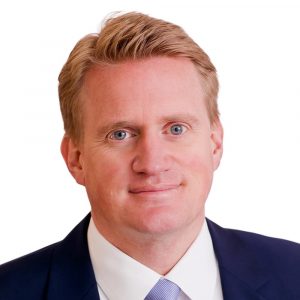
‘I have a love-hate relationship with earnings season’: Stonehage Fleming’s head of equities Tom Jeffcoate on working with IR

One of Europe’s leading multi-family offices was born from the merger of Stonehage and Fleming Family & Partners

When Stonehage and Fleming Family & Partners merged in 2015, the resulting institution became one of Europe’s largest multi-family offices which today manages more than $175 bn on behalf of some of the world’s high net worth dynasties in 14 geographies.

Tom Jeffcoate, who serves as the fund’s head of equity funds today, joined Stonehage before the merger in 2009, working side-by-side with Gerrit Smit, global best ideas lead fund manager and today head of the company’s global equity offering. Now he oversees company research within the equity management team, with a special focus on in-depth, bottom-up research covering firms across all sectors, and he manages the company’s $4.3 bn Global Best Ideas strategy. Prior to Stonehage, Jeffcoate held positions at ZAN Partners, Sigma Capital and PwC.

He talks to IR Impact about how the fund management industry has changed in recent decades, why he has a love-hate relationship with earnings season and why he values investor days so highly.

You’ve been in the fund management industry for some time. How have things changed?

We all use their products without thinking every day, very widely. They have built very strong economic moats and today they have the characteristics of the greatest consumer staples companies of years gone by, if not more so, combined with far stronger growth.

One of the most interesting dynamics that’s changed is that when we started the strategy in 2009, 60 percent of the fund was in consumer staples, and whilst our philosophy has remained totally unaltered, today a number of very high-quality technology companies have essentially become the modern-day consumer staples. Companies such as Alphabet and Microsoft are today massive cash generating machines.

In the past, investors were rather wary of the growth sustainability of a tech company, especially with hardware makers such as Blackberry and Nokia.

Today many technology companies have done a fantastic job of transforming into recurring revenue businesses with super strong balance sheets and strong cash generation. This has seen us change the universe of companies that we look at and our exposure to quality technology companies today is far larger than it was back in 2009.

I have a love-hate relationship with earnings season. What has changed in recent years is the volatility that we see now around results.. it is very dramatic and extreme and has obviously got a lot to do with the participants in the market. It can be very stressful.

What do you like most about working in investment management?

The Global Best Ideas Fund invests all around the world and in any sector, and with that comes great variety. You can uncover some really interesting, high-quality companies you may have not have previously thought about.

I also really enjoy the engagement with clients, many of whom run successful businesses themselves.

And what do you dislike?

I have a love-hate relationship with earnings season. What has changed in recent years is the volatility that we see now around results, with quality stocks dropping 10 percent on a small miss or a small change to outlook. It is very dramatic and extreme and has obviously got a lot to do with the participants in the market. It can be very stressful.

But with that comes the love part of it, because it can present some great opportunities for a long-term investor.

What’s your investment style?

The Global Best Ideas Fund is a quality growth fund. We seek to own the world’s best companies and to try to acquire them at attractive valuations.

We have a four-pillar quality strategy which is based on some very simple but must-have characteristics:

  • First, they must have the ability to deliver sustainable organic growth throughout the entire business cycle. For example, businesses with very high recurring revenue, strong pricing power and defensive business models.
  • Second, we seek companies with the highest quality management teams, so we focus intensely on their culture, drive and strategic vision.
  • Third is operational efficiency: everybody should want to own companies with super strong balance sheets, high ROICs and expanding profit margins.
  • Finally, our fourth pillar is strong free cash flow generation. We want our companies to really be cash machines that are either paying us an ever-growing dividend or buying back a lot of stock. If they’ve got a very high ROIC, we’re very happy for them to be reinvesting in innovation and future growth. With Alphabet, for example, we’re comfortable for them to be reinvesting in innovation because those ‘other bets’ turn into Waymo or Gemini, which turn into future profit growth opportunities.

Is there a market cap cut-off?

Officially it’s $10 bn, but our smallest holding is close to $40 bn. Our main priority is liquidity, where we require at least $75 mn in daily value traded. We can sell our entire fund in less than a week if necessary.

Any sectors you avoid?

Due to our four-pillar approach and our need for sustainable revenue growth no matter what’s going on in the world, we avoid commoditized companies, so resources. Our obsession with sustainable growth sees us also keep away from pharmaceutical companies with patent risks and complex product development pipelines. A few years ago, we were constantly asked why we didn’t own [weight loss medication] GLP1 drug companies.

What screens do you use?

Our core universe that we cover is just 150 companies. Our official benchmark is the MSCI All Country World index, but we really focus all our energy on these 150 companies which are screened for 15 quality tests. We consider size and liquidity, then growth and profitability, ROIC, ROE and balance sheet strength. Finally, the dividend record and an ESG test.

We only hold between 20 and 30 companies so it’s a very high-conviction strategy.

Average holding period?

Ideally, we will hold a company forever – there are five companies that we’ve owned since we started the fund – but on average it’s about five years.

Active share figure?

Currently 86 percent.

Capital allocation?

The discipline of an ever-growing dividend is fantastic. But we recognize the importance of reinvesting in the business for profitable growth. Buybacks are also a positive at the right valuation.

Your holdings are heavily weighted to the US – why is that?

The US has just been a tremendous region for value creation for shareholders through innovation and expertise. It’s currently where we find the best management teams. But we are a global fund, and we proactively seek regional and sector diversification. We’re not a US tech fund.

Can you talk about some of your larger holdings?

GE Aerospace is a $270 mn position across the whole strategy. Today it is a fantastic business. Larry Culp, the CEO, has done a phenomenal job of deconstructing the old GE. A few years back, it was obviously a huge conglomerate, but the jewel within that portfolio was the GE Aerospace business. It was producing lots of cash flow, but that was having to go to fight fires elsewhere in the business. Now the conglomerate has been broken up, and GE Aerospace is purely just the jet engine business.

We really like spin out companies. We’re very patient, so we can sit there and watch them for a while.

Their jets are on 75 percent of all planes in the sky and they have a service length of 30 years: that service business is why we own GE. It’s very high-margin, highly sustainable and a low-cyclical industrial business. Operationally, we’re seeing very strong earnings and cash flow growth that is now benefiting shareholders. So it’s a fantastic business with an incredibly strong competitive position. An exceptional company.

We really like spin out companies. We’re very patient, so we can sit there and watch them for a while. Often, they might get spun out with a ton of debt or some poor working capital that’s got to be sorted out. But, once unleashed, they do very well. A good example is former holding of ours is Edwards Lifesciences which came out of Baxter. It did exceptionally well as a standalone entity and was a great performer for us over a number of years.

Why do you own MasterCard as well as its competitor Visa?

We have owned Visa since 2009 and we initiated the position in MasterCard a few years ago as we love the payment space.

Visa’s obviously quite US debit-focused. MasterCard has positioned itself a bit differently and is a more international business. Both are growing attractively into new payment areas.

We look at them collectively though, and their combined weight is just over 8 percent in the fund.

The cash flows in payments are fantastic and both have a highly resilient business model that serves everybody in the ecosystem. They have proven to be tremendously hard to disrupt.

What about Amphenol?

It’s not a name you see in every portfolio. This is a business of businesses, brought together via a highly strategic acquisition strategy All companies within Amphenol are operate at slightly different stages of the business cycle so when you combine them all together, its growth is smoothed out over the cycle.

Part of its offering today plays a critical role in the build-out of AI data centers. The inter-connect cabling business (for NVIDIA graphics processing units and Google tensor processing units, for example) is a fantastic growth business and is the industry leader.

One-on-one, in-person meetings are the most valuable especially when you’re trying to get a sense of their values and culture. Investor days are brilliant too as you get to meet people that you don’t normally meet: you really get a feel for the firm and what it’s like to work there.

They’ve also done a couple of very astute corporate actions recently, buying a distressed business at a very low valuation which has benefited the earnings growth of the business. It’s been one of our top performers this year – up over 100 percent year to date.

How do you prefer to meet company management?

One-on-one, in-person meetings are the most valuable especially when you’re trying to get a sense of their values and culture. Investor days (or capital markets days) are brilliant too as you get to meet people that you don’t normally meet: you really get a feel for the firm and what it’s like to work there.

With consumer-facing companies, it’s essential that we are users of the products and get out there and visit their stores and have a proper understanding of their offering.

What is your outlook for 2026?

There’s obviously a lot of chat about bubbles, but there are a lot of high-quality companies (outside of the AI infrastructure space) that are today very attractively valued. Data owners with a digital user interface and many software services companies have de-rated because there’s uncertainty of what AI means for them. For example, Salesforce.com – because there’s some investor uncertainty over its durability, it looks attractively valued today relative to its own history.

Many quality companies that are usually expensive are currently relatively cheap. Market returns this year have been driven by a very concentrated number of stocks. In healthcare, many medical device companies have underperformed for a long time now and it’s in these sectors – along, with financial services, particularly the exchanges – that I hope to see a recovery.

In 2026, therefore, I hope we will see the ‘return of the rest’.

By Gill Newton, partner at Phoenix-IR. This interview also appeared in IR Impact on December 9, 2025.